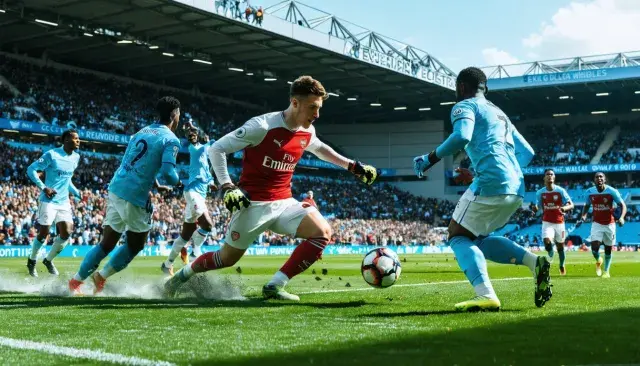

Real Madrid CF is preparing to part ways with forward Gonzalo García in the coming summer window, according to reports, under a financial structure that would see the club retain a 50 percent stake in the young Spaniard's future transfer value. The arrangement reflects a deliberate institutional strategy: release talent that cannot yet be accommodated at the highest level, while preserving the option to reclaim it if circumstances change. For García, who emerged on the global stage at the 2025 Club World Cup before fading into the margins of the first-team picture, the move represents both an opportunity and a reckoning.
A Familiar Formula for Managing Young Talent
The proposed structure is not new for Real Madrid. The club applied a similar model to several recent departures — including Nico Paz, Jacobo Ramon, and Chema Andrés — each sold with a 50 percent retention clause built into the agreement. This approach has become a recognizable feature of how Madrid manages its development pipeline: rather than allowing promising figures to leave outright, the club positions itself to benefit financially if the individual's value rises elsewhere, and retains a conditional pathway to bring them back should the right circumstances arise.
From a business standpoint, the logic is sound. Outright sales of young, unproven figures often undervalue long-term potential. A partial retention clause converts what might otherwise be a one-time, relatively modest fee into a longer investment — one that pays out again if the individual commands a larger valuation down the line. It is a hedging mechanism, and Madrid has applied it consistently enough that it now reads as institutional policy rather than a case-by-case negotiation.
Why García's Position Became Untenable
García's trajectory this season illustrates how quickly momentum can stall at an elite institution. His four-goal contribution during the Club World Cup — stepping in during Kylian Mbappé's absence — was enough to earn him a place in the first-team squad for the 2025–26 campaign. It was a significant moment: high-visibility, high-pressure, and widely observed. But visibility during a moment of need is different from structural integration into a club's plans, and the distinction has defined his year.
Across this season, García has accumulated roughly 1,200 minutes of involvement — a figure that, spread across a full campaign, amounts to meaningful but irregular participation. Crucially, even during the extended period when Mbappé was unavailable through injury, García was unable to consolidate a regular role. That failure to hold ground when the opportunity was most open is the clearest signal that his development requires a different environment — one where his minutes are guaranteed rather than rationed, and where the expectation is that he carries responsibility rather than fills a gap.
The Development Logic Behind the Exit
For any young forward operating in the shadow of a generational talent, the calculus is straightforward: time on the field is the irreplaceable input. Technical development can be refined in training; decision-making, composure under pressure, and positional authority are built only through sustained competitive involvement. A career spent waiting for injuries and rotational openings at the highest level can hollow out potential just as effectively as poor coaching or a weak environment.
The reported move is framed, credibly, as a chance for García to gain consistent exposure at a level where he will be relied upon rather than optional. The 50 percent retention clause ensures this is not a farewell — it is a structured loan of development time, with Madrid positioned to reassert its interest if García proves himself elsewhere. Whether that reassertion ever happens will depend entirely on what he does with the opportunity. The framework exists; the outcome does not.